Ball bearings are among the most important components in numerous machines, tools, vehicles, and everyday objects. They ensure that movements run as smoothly, precisely, and efficiently as possible. It is therefore all the more noticeable when a bearing suddenly runs roughly, makes unusual noises, or no longer moves as freely as usual.
Many people assume at this moment that the ball bearing is worn out and needs to be replaced. In fact, however, it is not always an irreparable defect behind it. Often, dirt particles, metal abrasion, moisture, or aged lubricants accumulate inside over a long period. These residues can impair mobility and cause the bearing to run significantly rougher than originally intended.
Precisely because these changes often develop gradually, they are initially barely noticed. Anyone who knows the typical causes, however, can better assess when cleaning might be useful and when an actual replacement becomes necessary.
In this article, we explain to you why ball bearings can run roughly over time, what role dirt, metal abrasion, and moisture play in this, and why thorough cleaning can make sense in some cases before considering a replacement.
Why ball bearings can run roughly over time
Ball bearings often work under high load. They transfer forces, enable rotary movements, and are constantly exposed to friction, vibrations, and environmental influences. Even with high-quality bearings, tiny abrasion particles are created during operation, which can collect inside over time.
Added to this are external influences such as dust, moisture, dirt, or temperature fluctuations. If these substances get into the bearing, they can impair the original lubrication and change the running characteristics. It becomes particularly critical when dirt particles mix with lubricants. This creates deposits that can impair the mobility of the balls and raceways.
A roughly running ball bearing is therefore not automatically an indication of a total loss. Often, these are initially changes caused by contamination or aged lubricants. The resulting noises or increased resistance are often the first signs that an inspection might be useful.
The longer such deposits remain in the bearing, the more they can influence its function. Therefore, it is worth not ignoring initial changes and checking the cause as early as possible.
Which deposits are often overlooked
When ball bearings run roughly, the suspicion often lies on a mechanical defect. In fact, however, many contaminants are overlooked because they are barely visible from the outside. The inside of a ball bearing is a protected area where residues can accumulate over a long time without being noticed immediately.
Among the most common causes are fine dust, metal abrasion, old lubricants, and moisture. During normal operation, tiny particles are created by friction between the moving components. These particles mix with lubricants and can form a viscous layer over time. This makes the free movement of the balls increasingly difficult.
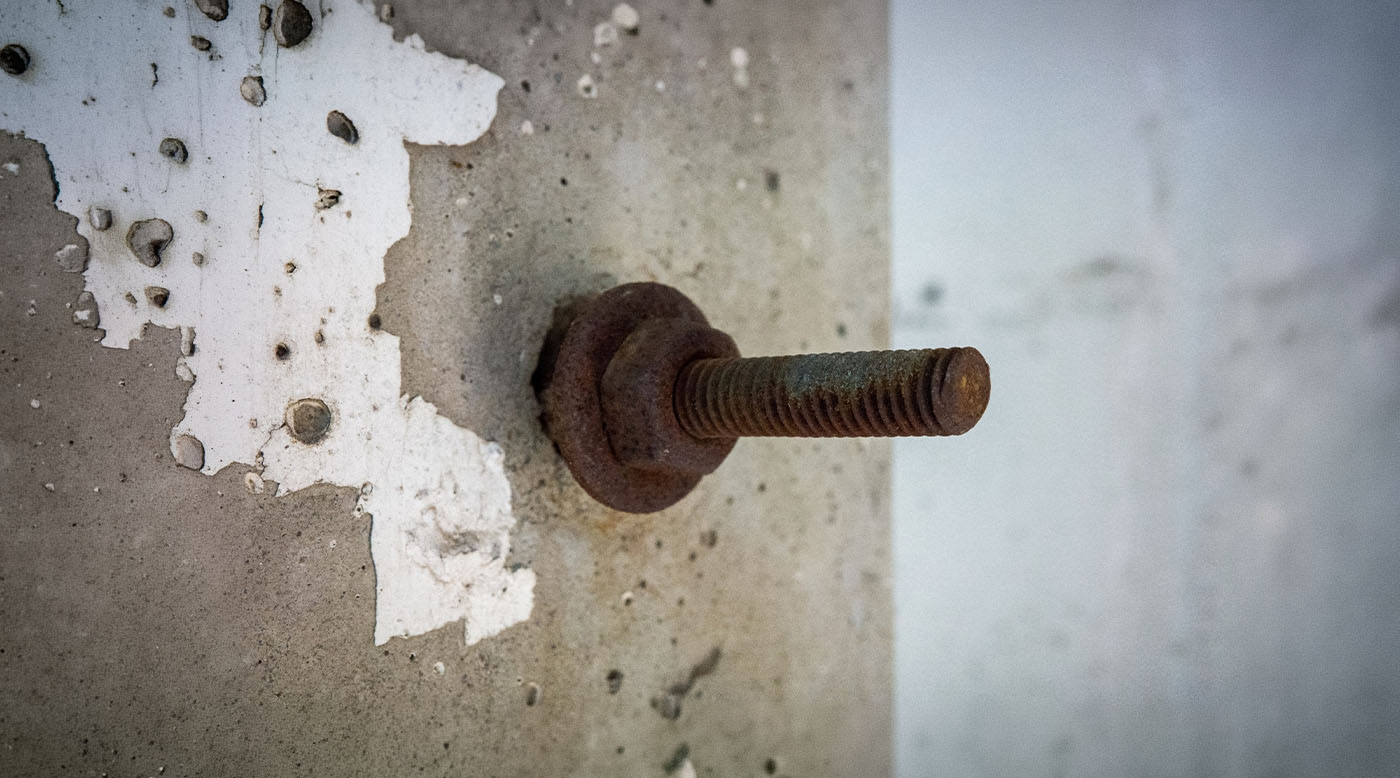
Moisture also plays an important role. Even small amounts can contribute to the formation of corrosion traces or cause lubricants to lose their original properties. In combination with dust and abrasion, deposits are formed that can significantly change the running characteristics.
Many of these residues are barely recognizable to the naked eye, yet significantly influence the precision and smoothness of a ball bearing. It is particularly problematic that the changes usually develop gradually. Noises, vibrations, or increased resistance often only occur when a larger amount of deposits is already present.
Therefore, regular inspection is especially worthwhile for components that are permanently exposed to high loads or difficult environmental conditions.
When a replacement is not immediately necessary
A roughly running ball bearing does not automatically mean that a replacement part is needed. In many cases, it is replaced prematurely, although the actual cause lies in contamination or aged lubricants. Before costs for new components are incurred, a more precise check can therefore be useful.
Of course, there are situations where a replacement is unavoidable. Deep raceway damage, severe corrosion, material fractures, or significant wear cannot be remedied by cleaning. However, the situation is different when the impairment is mainly caused by deposits.
Especially with high-quality or difficult-to-access bearings, it can be worthwhile to first assess the condition of the components more closely. It is not uncommon to find that dirt, metal abrasion, or old lubricant residues are the main cause of the altered running characteristics. After thorough cleaning, the bearing can often run much more smoothly in such cases.
Cleaning does not replace repair, but it can help to rule out contamination as a source of the error. This makes it often easier to assess whether there is actually a technical defect or whether only deposits are impairing the function.
Especially in regularly maintained machines, tools, or technical systems, this procedure is part of standard maintenance in many places. It enables a more well-founded decision regarding the actual state of a ball bearing.
How ultrasonic cleaning is used for ball bearings
Ball bearings consist of numerous small contact surfaces, raceways, and gaps. These very areas often make cleaning difficult. While visible contamination on the surface can usually be removed easily, deposits inside often remain.
Therefore, ultrasonic cleaning is used in many technical areas for cleaning ball bearings and metal components. High-frequency vibrations are transmitted to a cleaning fluid. Tiny bubbles are created, which release energy when they collapse. This process, known as cavitation, can help to loosen residues even from hard-to-reach areas.
Especially for complex components with fine structures, ultrasonic cleaning is often used to remove deposits evenly. This applies not only to ball bearings but also to tools, precision parts, or technical components with narrow gaps.
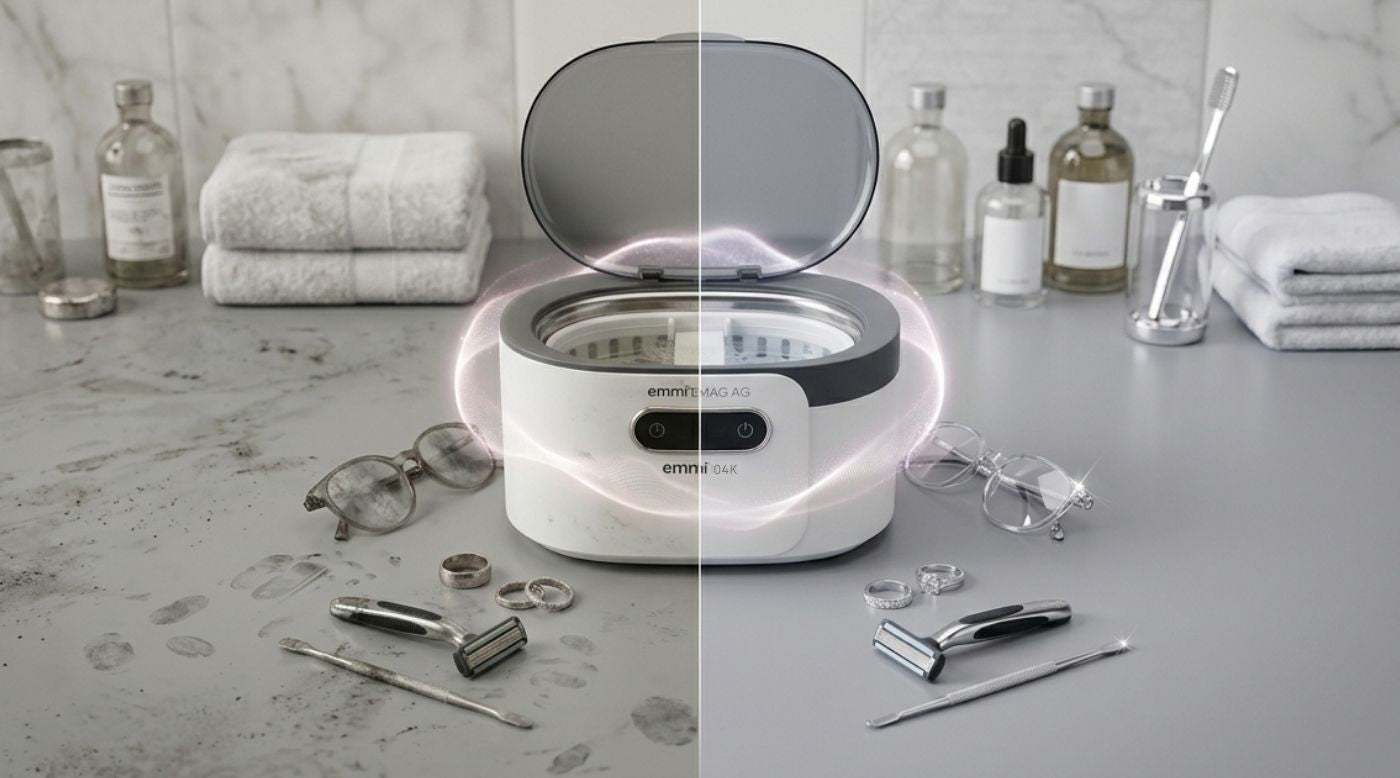
For industrial and professional applications, systems like our EMAG ultrasonic cleaners are often used. These devices are employed in workshops, production facilities, and maintenance areas to clean metal parts thoroughly. However, the cleaning duration, temperature, and cleaning fluid that are suitable always depend on the respective component and its condition.
Before any cleaning, material compatibility as well as the manufacturer's specifications should be checked. Not every bearing and not every assembly is equally suitable for every cleaning method. Proper application contributes to ensuring that cleaning is carried out as gently and effectively as possible.
How to keep ball bearings functional for longer
Regular maintenance can significantly contribute to extending the service life of ball bearings. Many problems do not arise suddenly but develop over longer periods. Anyone who recognizes initial signs early can often take countermeasures before major damage occurs.
Among the most important measures are removing contamination as early as possible and protecting bearings from permanent moisture. Equally important is appropriate lubrication. Lubricants reduce friction and help protect the moving components. However, old or contaminated lubricants should be checked regularly, as they can themselves become a source of new deposits.
The environment also plays an important role. Dusty work areas, high humidity, or strong temperature fluctuations significantly increase the load on ball bearings. In such environments, regular checks are particularly useful.
Preventive care particularly includes:
- Regular visual and functional inspections
- Removal of dirt and deposits
- Protection against moisture and corrosion
- Checking and renewal of lubricants
- Early detection of unusual noises or vibrations
Often, it is not the load alone that determines the service life of a ball bearing, but the handling of contamination and maintenance intervals.
A roughly running ball bearing does not necessarily have to be replaced. Often, the first problems arise from dirt, metal abrasion, moisture, or aged lubricants that have accumulated inside over a long time. These deposits can noticeably change the running characteristics and lead to noises or increased resistance.
Anyone who knows the typical causes and checks regularly can identify many problems at an early stage. Thorough cleaning, combined with appropriate maintenance and proper care, helps to maintain the functionality of ball bearings for as long as possible. Especially with high-quality components, it is often worthwhile to first check the actual condition before deciding prematurely on a replacement.