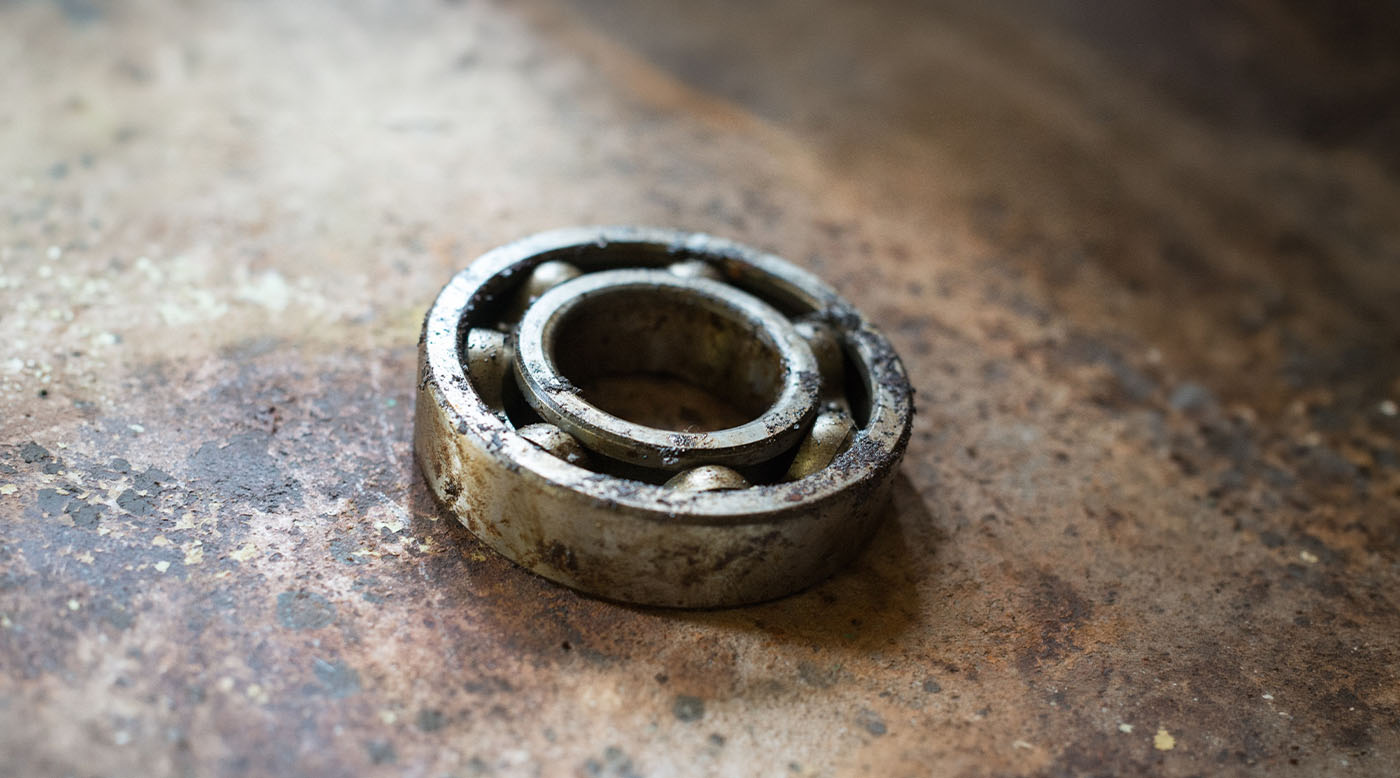
Metal connections are among the most heavily stressed areas in many machines, tools, and technical systems. Whether joints, bearing points, hinges, couplings, or other moving components—wherever metal meets metal, stress occurs. Many people assume that wear is caused solely by age or intensive use. In fact, however, numerous other factors play a role.
Dirt, dust, abrasion, moisture, and aged lubricants can significantly increase the stress on metal connections. The changes often develop slowly and remain unnoticed for a long time. Only when movements become heavier, unusual noises occur, or components develop play does the wear become visible.
Precisely because the causes usually develop gradually, they are often underestimated. Anyone who understands how deposits and environmental influences affect metal connections can identify many problems early on and take targeted countermeasures.
In this article, we explain why metal connections often wear out faster than expected, which causes are frequently overlooked, and how regular cleaning can help maintain functionality for longer.
Why wear often occurs gradually
Wear rarely happens overnight. In most cases, it is a slow process that takes place over months or even years. Every movement of a metal connection generates friction. Even if this is reduced by lubricants, minimal stress still occurs on the contact surfaces.
In addition, external influences affect the components. Dust particles get into moving areas, moisture can promote corrosion, and temperature fluctuations affect the properties of lubricants. These stresses add up with every use.
It becomes particularly critical when dirt particles get stuck between the contact surfaces. They act like fine abrasives and increase material removal. This process often remains unnoticed for a long time, as the changes are initially minimal. Over time, however, running noises, increased resistance, or erratic movement can occur.
Wear is therefore often the result of many small influences and not just a single cause. Those who recognize the first warning signs often have the opportunity to slow down the development early on and positively influence the service life of metal connections.
The role played by dirt and old lubricants
Lubricants are intended to protect moving metal connections, reduce friction, and support the most uniform movement possible. Over time, however, these lubricants change. They age, lose some of their original properties, and can simultaneously bind dirt particles from the environment.
This is precisely where a process often begins that remains unnoticed for a long time. Dust, abrasion, moisture, and tiny foreign particles mix with existing lubricants. This creates an increasingly viscous mass that can settle in joints, bearing points, guides, or other moving areas.
This becomes particularly problematic with components that are regularly exposed to high loads. There, the trapped particles act like fine abrasives. With every movement, they can increase material removal and thus accelerate wear.
Old lubricants themselves can also become a problem. Some products change their consistency due to aging or lose their protective effect. As a result, friction between the metal surfaces increases. At the same time, new deposits can settle more easily.
Many signs of wear therefore arise not in spite of existing lubrication, but because of contaminated or aged lubricants. Regular inspection and cleaning can help identify and reduce these stresses at an early stage.
Why deposits can increase stress
Even the smallest residues can have a major impact on the function of a metal connection. While a clean contact surface allows for the most uniform movement possible, deposits create additional resistance. This resistance leads to greater stress on the components.
Areas where dirt accumulates permanently are particularly critical. Joints, bearing points, rail guides, or coupling elements offer numerous small spaces where dust, abrasion, and lubricant residues can become trapped. The residues often remain there for a long time and become compacted with every further use.
In addition, so-called micro-movements can occur. These are minimal movements between contact surfaces that are often not visible to the naked eye. If these movements encounter existing dirt particles, material wear can increase further.
The longer deposits remain in the system, the more they can alter the original running characteristics. The consequences are often increased friction, uneven movement, noise generation, or a shortened service life of the affected components.
For this reason, the regular removal of residues plays an important role in the maintenance of many technical systems. This can often prevent small amounts of dirt from leading to larger problems in the long term.
How ultrasonic cleaning is used for metal parts
Many deposits occur in places that are barely accessible with normal cleaning. Joints, bearing areas, threads, guides, or other complex structures offer numerous small spaces where dirt and old lubricant residues can accumulate. This is precisely where the process that later leads to increased wear often begins.
For this reason, ultrasonic cleaning is used in many technical areas. High-frequency vibrations are transmitted to a cleaning fluid. Tiny bubbles form, which release energy when they collapse. This process, known as cavitation, can help loosen residues even from hard-to-reach areas.
Especially in the case of metal connections with fine structures, ultrasonic cleaning is frequently used to remove deposits as uniformly as possible. This allows even areas that are difficult to access with brushes, cloths, or other conventional cleaning methods to be reached.
In workshops, production plants, and maintenance departments, professional systems such as our EMAG ultrasonic cleaners are often used for this purpose. Such devices are used for metal components, tools, precision parts, and technical assemblies, among other things. However, which cleaning parameters make sense always depends on the respective material, the contamination, and the manufacturer's instructions.
Before any cleaning, it should be checked whether the component in question is suitable for ultrasonic cleaning. Material compatibility and manufacturer specifications remain important prerequisites for proper use.
How to protect metal connections long-term
Wear cannot be completely avoided. Every mechanical movement leads to a certain load on the components involved. Nevertheless, there are numerous measures that can help keep metal connections functional for as long as possible.
An important factor is regular maintenance. Anyone who checks moving components at fixed intervals will often detect changes much earlier. Unusual noises, increased resistance, or visible deposits can be the first signs of developing problems.
Equally important is proper care. Old lubricants should be checked regularly and replaced if necessary. At the same time, it is worthwhile to remove dirt early on before it can become permanently established. Protection against moisture also plays an important role, as corrosion can increase the load even further.
A sensible maintenance strategy includes in particular:
- Regular visual and functional inspections
- Removal of dirt and deposits
- Protection against moisture and corrosion
- Early detection of signs of wear
Often, it is not just the intensity of use that determines the service life of a metal connection, but the quality of maintenance and care.
Metal connections are exposed to numerous stresses every day. In addition to the actual mechanical strain, dust, abrasion, moisture, and aged lubricants also act on the components. Many of these influences initially go unnoticed and only lead to noticeable changes over a longer period of time.
Anyone who understands the causes of wear can identify many problems early and take targeted countermeasures. Regular cleaning, combined with appropriate maintenance and proper care, helps to maintain the functionality of metal connections for as long as possible. Especially with technical components, it is worth looking not only at the visible condition, but also at the areas where deposits often accumulate unnoticed. That is where the process often begins, which later leads to increased wear.