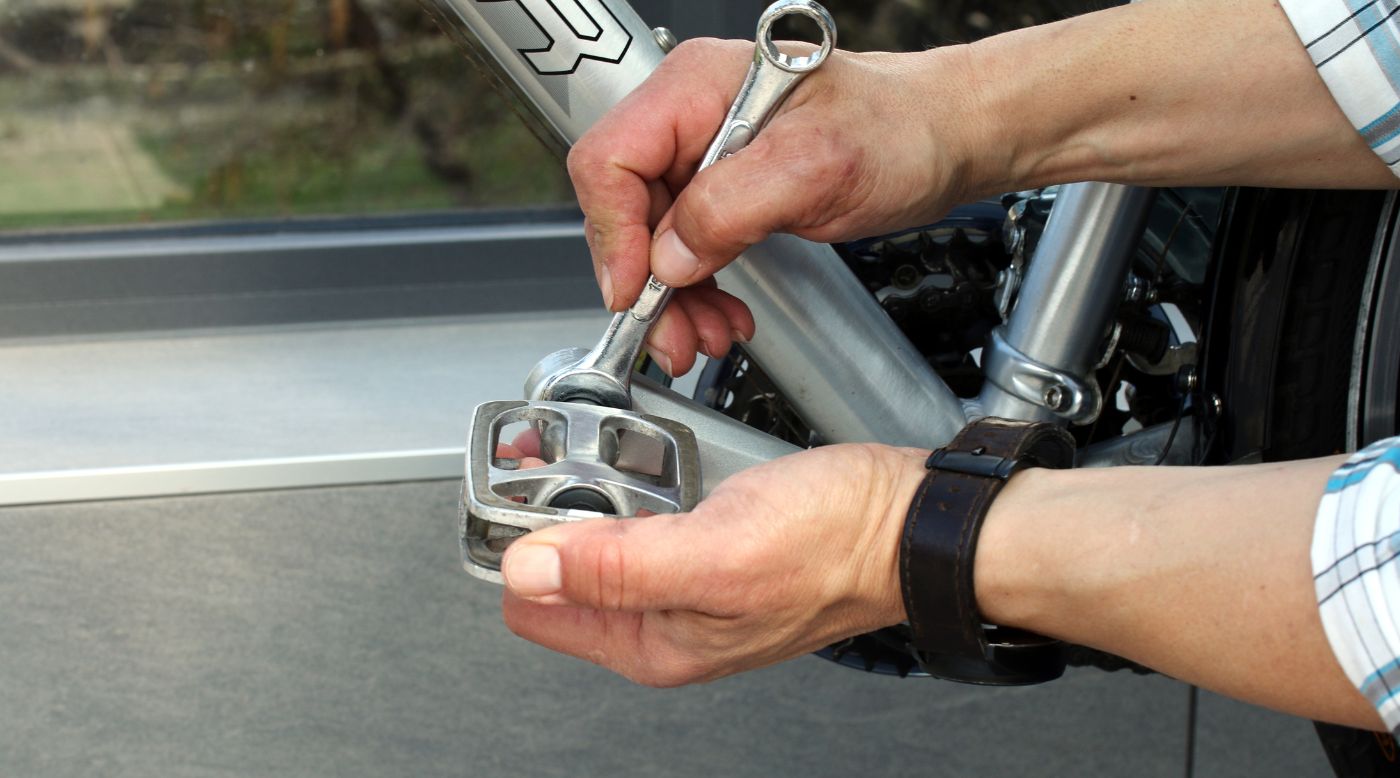
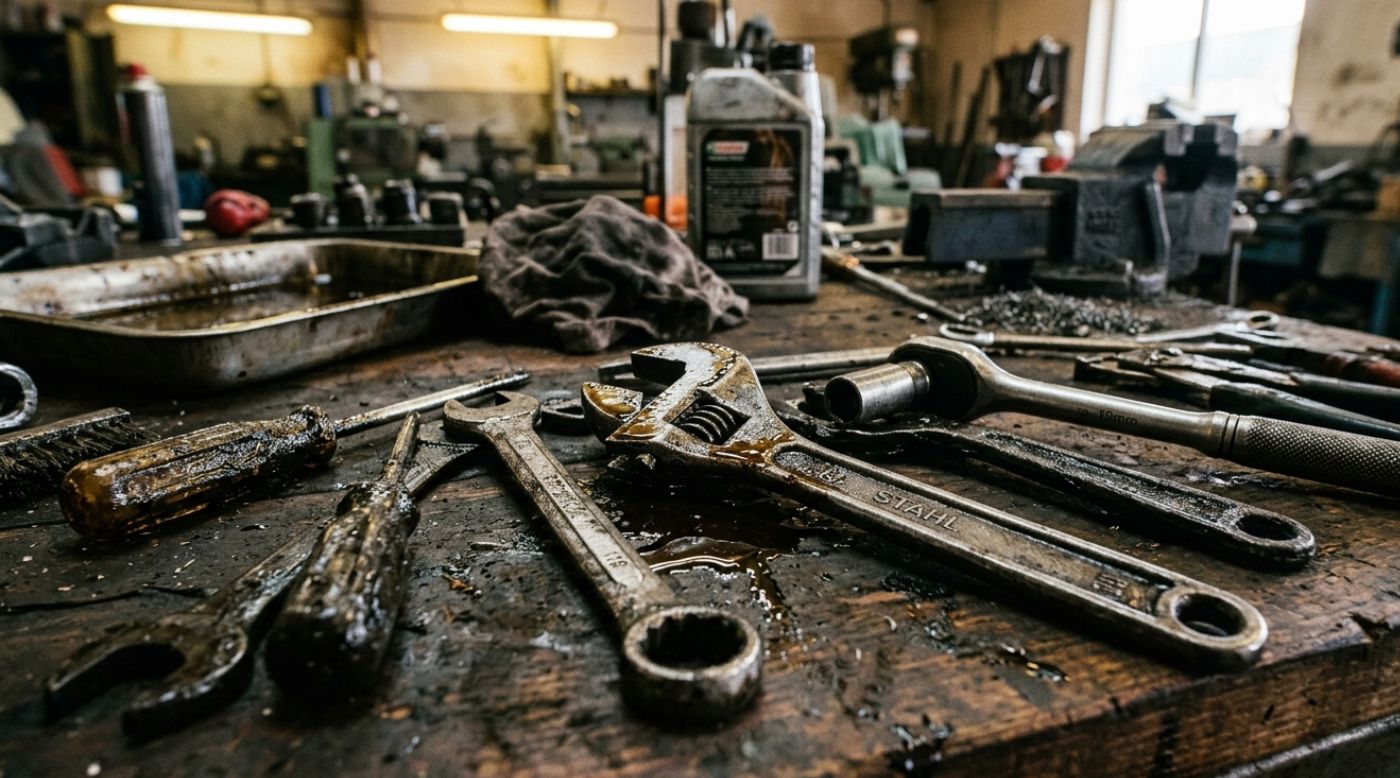
Many people immediately suspect a defect or normal wear and tear when metal parts become stiff. However, often something much more mundane is behind it. In everyday life, dust, pollen, grease particles, oil residues, and the finest dirt particles accumulate on and in moving components. These deposits build up gradually and remain unnoticed for a long time. Only when mechanisms become harder to move or unusual noises occur does the problem become apparent.
Metal parts that are regularly used or constantly exposed to environmental influences are particularly affected. These include, for example, hinges, bearings, joints, tools, bicycle components, or precision mechanical parts. Even high-quality materials are not protected if residues accumulate over a long period.
Understanding how these contaminations arise and why they can affect function often provides the opportunity to counteract them early. This can keep many mechanisms moving smoothly for longer and reduce unnecessary stress.
In this article, we explain why moving metal parts can become stiffer over time, which causes are often overlooked, and how hidden deposits can be identified and removed.
Why moving metal parts become stiffer over time
Metal parts often move under high load. This creates friction, abrasion, and tiny particles that can deposit in the immediate vicinity. At the same time, new contaminants constantly enter from the environment. Dust from interiors, pollen from the air, dirt particles from streets or workshops, and moisture together form a mixture that preferentially collects in moving areas.
This process often happens slowly. Initially, the changes are barely noticeable. Over time, however, fine deposits form that can affect the movement. Joints react more sluggishly, bearings run less freely, or hinges develop greater resistance. Many users only notice this when the mechanism works significantly harder than usual.
Areas that are rarely visible are particularly problematic. Contaminants can accumulate there without being noticed during a normal visual inspection. Narrow gaps, bearing areas, or threads, in particular, offer ideal conditions for deposits.
In addition, lubricants can age over time. They lose their original properties, bind dirt particles, and sometimes form viscous residues. This creates a cycle in which more and more contaminants become embedded and mobility is increasingly restricted.
What deposits can accumulate unnoticed
When metal parts become stiff, many first think of rust or lack of lubrication. In practice, however, many more factors often play a role. Many contaminations arise gradually and remain undetected for a long time because they accumulate deep inside moving components.
The most common residues include dust, pollen, grease particles, oil residues, abrasion, and environmental dirt. Especially in workshops, garages, or outdoor areas, fine particles constantly enter the ambient air. These settle on metal surfaces and are literally attracted by lubricants. Over time, a mixture forms that can be significantly more viscous than the original lubrication.
Moisture also plays an important role. Even if no visible corrosion occurs, moisture can contribute to dirt particles adhering more strongly to surfaces. In combination with dust and lubricants, deposits form that can impair the movement of joints, bearings, or hinges.
Many of these residues are barely visible to the naked eye. From the outside, the component often appears clean, while layers have already built up inside. This is precisely why the cause of stiff mechanisms is often overlooked or mistakenly interpreted as normal wear.
The more complex a component is, the greater the likelihood that contaminants will collect in hard-to-reach areas. Regular inspections and thorough cleaning help to detect such deposits early.
Why lubricants alone often don't solve the problem
When a metal part becomes stiff, many people automatically reach for oil or grease. This can indeed lead to a short-term improvement. However, the actual cause is often not eliminated.
If deposits are already present inside a component, these are not removed by additional lubricant. Instead, dust and dirt can adhere even more strongly to the existing residues. This means that the mechanism initially runs more smoothly again, but the problem reappears after some time.
Another problem is that old lubricants can change their properties over time. They partly dry out, become viscous, or mix with abrasion and dirt particles. This creates a kind of coating that can further restrict movement.
Effective care therefore often begins with thorough cleaning and not with additional lubrication. Only when old residues have been removed can a new lubricant perform its task optimally.
Especially for precise metal parts, bearings, or precision mechanical components, it is therefore worthwhile to first check the cause of the stiffness. Often it turns out that not a lack of lubrication, but accumulated contaminants are the actual problem.
How ultrasonic cleaning can reach hidden dirt
In many metal parts, the problematic deposits are located precisely where they are difficult to reach with conventional cleaning methods. Narrow gaps, threads, bearing areas, joints, or fine interspaces often pose challenges for brushes, cloths, and compressed air. Visible dirt can usually be removed without problems, but the actual cause often remains.
Here, ultrasonic cleaning can be a useful addition. High-frequency vibrations are transmitted into a cleaning fluid. Due to the so-called cavitation, tiny bubbles are created that can act on surfaces and in hard-to-reach areas. This allows deposits to often be reached even where mechanical cleaning methods reach their limits.
Especially for complex metal parts with many gaps, ultrasonic cleaning is therefore often used. It can help to loosen dirt particles, old lubricant residues, or fine deposits from surfaces without each component having to be manually processed.
For workshops, craft businesses, and industrial applications, professional devices like our EMAG ultrasonic cleaners are often used. Such systems are used to thoroughly clean metal parts, tools, or technical components. However, the appropriate cleaning duration, temperature, and cleaning fluid always depend on the respective material and the type of contamination.
It is important to always check material compatibility and observe manufacturer's instructions before any cleaning. Not every coating and not every component is equally suitable for ultrasonic cleaning.
How to maintain smooth operation long-term
Successful cleaning is often only the first step. For metal parts to remain smooth-running in the long term, regular maintenance plays a crucial role. Many problems arise not from individual heavy contaminations, but from continuous deposits over months or even years.
After thorough cleaning, metal parts should dry completely. Residual moisture can contribute to new deposits forming faster or promoting corrosion. Afterwards, depending on the component, suitable lubrication may be advisable. However, the manufacturer's recommended amount should always be used.
Proper storage is equally important. Tools, components, or mechanical parts benefit from as clean and dry an environment as possible. This prevents dust, dirt, and moisture from accumulating unnecessarily.
Regular visual and functional checks are also helpful. Those who recognize initial changes early can often intervene before major problems arise. Especially for components that are regularly moved or stressed, this attention pays off in the long run.
Sensible maintenance includes:
- Regular cleaning of moving areas
- Complete drying after cleaning
- Needs-based lubrication
- Protection from dust and moisture
- Early inspection for deposits or wear
Often it is not major defects, but small, overlooked contaminations that impair the function of moving metal parts.
When metal parts become stiff, it is not necessarily a technical defect. Often, it is fine deposits of dust, grease, oil residues, or abrasion that have accumulated over a long period. Precisely because these contaminations often remain invisible, they are easily overlooked.
Those who know the typical causes and regularly inspect moving components can identify many problems early. Thorough cleaning, combined with appropriate care and proper storage, helps to maintain smooth operation and functionality in the long term. Especially for complex metal parts, it is worthwhile to take a closer look at the areas that often remain hidden during everyday cleaning. This is often where the reliability of a mechanism in the long run is decided.